

Lyme disease information
Lyme disease from ticks
A small tick bite may seem insignificant, but today we know better. This does not mean that you need to panic because you have been bitten by a tick, but it is important to understand that it should be taken seriously and handled correctly. Lyme disease can be transmitted by ticks that carry the infection. However, it is useful to know that you will not necessarily become infected because of a bite, even if the tick carries the disease. Remove the tick as soon as you can and clean the wound. Then keep an eye on the area where you were bitten.
What is Lyme disease?
The bacterial infection Lyme disease is well known in Sweden as a disease that can be contracted through tick bites. The bacterium that causes the infection is called Borrelia burgdorferi, and it is one of several different bacteria in the same category that can cause Lyme borreliosis. In English, the disease is called Lyme disease.
The bacteria, also called spirochetes, reach humans via a host animal, known as a vector. In Sweden, the tick Ixodes ricinus, or the sheep tick, often acts as the vector. It feeds on blood from birds and other animals as well as humans and can thereby acquire the bacterium. Not every tick carries the bacterium, so every bite is not a cause for concern. The bacteria are stored in the tick's gut and, during a subsequent bite, can move from the intestinal tract via the salivary glands to the animal or person from whom the tick takes its next blood meal.
If these bacteria enter the body, they can spread further and cause considerable discomfort. It is best to treat Lyme disease at an early stage. This helps avoid more serious conditions such as inflammation and infections in important body systems, for example the nervous system. A simple self-test provides results in just a few minutes. You can find our self-test for Lyme disease here.
Lyme disease symptoms
It is very important to be alert to symptoms that may indicate Lyme disease. Common symptoms of Lyme disease include:
- Headache
- A feeling of persistent fatigue
- Pain in both muscles and joints
- Irritated skin and redness with a diameter of at least 5 cm. Red marks often appear within 3-30 days after the bite. The rash can remain for several weeks.
- Redness that continues to expand.
- Borrelial lymphocytoma on the earlobe. This is a red swelling that causes the earlobe to hang down. It is often seen in affected children.
- Nausea
- Dizziness
- Neck stiffness
- Fever
- Infected lymph nodes
- Heart problems
There are also more serious symptoms that can occur after a tick bite but are less common. This is especially the case if treatment is not started early with penicillin at milder stages. If the infection is allowed to spread uncontrolled through the body and affects the nervous system and brain, it can in fact lead to permanent damage that cannot later be cured. But as mentioned, this is very unusual and not a reason to never go out into forests and countryside where ticks live.
Is this Lyme disease?
It is certainly useful to have information online and to be able to search online, but do not self-diagnose by reading on the internet. For example, you can choose to take a Lyme disease test to quickly find out whether it is Lyme disease or not. Taking a test or going to the doctor cannot be considered a waste of time. Even though it will most likely turn out that you have not been infected, it is important to check after a bite that may have caused redness or swelling in you or a child. This is especially important if additional Lyme disease symptoms are experienced.
It is not difficult to determine whether you have been affected, so it may seem wrong to ignore the issue and risk complications that can take a long time to heal. Even if you have not seen an actual tick on your body, you may have been bitten. If you notice skin redness after spending time in forests, tall grass or another place where ticks are found, you should make sure to get a professional answer as to whether it is Lyme disease. A tick bite can itch. If you feel itching, it is recommended that you check that area particularly carefully.
How do I get Lyme disease and how can I avoid it?
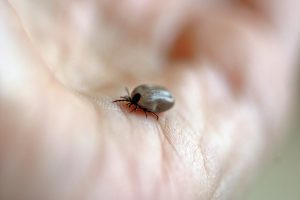
You do not contract Lyme disease just anywhere. You must first be bitten by a tick carrying the infection, and the bite must allow the infection to enter your body. Sometimes infected ticks bite but the bacterium does not have time to enter the body because the tick is removed quickly. With this in mind, it is wise to stay alert. If you have walked through a wooded area or tall grass, check whether you brought home an unwanted guest. With a good tick remover, you can quickly remove the tick, significantly reducing the risk that infection has entered the body.
Tick removers are useful because they make it possible to remove the tick whole and smoothly. If parts remain, the risk of infection has not been eliminated. This should be kept in mind for both people and animals.
Ticks are found throughout Sweden. Only in the inland parts of northern Sweden can you generally avoid these blood-thirsty little animals. Especially along the Swedish coasts, you should be prepared for bites if you walk through brushy natural areas with bare legs. It is estimated that approximately one third of all ticks in Sweden carry the infection and that about 1 bite in 150 results in infection. In other words, it is not extremely rare, but neither does it occur with every tick bite.
Wearing long trousers, socks, long sleeves and boots makes it more difficult for ticks to reach the skin. Even if they crawl into a boot, they are less likely to get past socks and trousers before you shake them off and wash after the outing. During periods when you spend a lot of time outdoors, check your own body, children and pets daily. Ticks are easy to see, as are tick bites that could lead to infection.
If you have pets
If you have a cat or dog that regularly spends time outdoors, there is a high risk that the animal will come home with ticks. If you are not in the habit of checking the animal's coat daily, you may first notice the tick when it has grown large and looks a little like a fluid-filled green-blue bump. It is important to remove the tick and to do so correctly. Learn more about how to remove ticks from pets and make sure no parts remain in the animal's skin. Keep in mind that furry animals can come home with ticks moving freely in their coat, ready to climb onto people in the household. Also be careful to wash your hands and the tick remover after handling the animal.
If pets are allowed on beds, sofas and other places where people sit and rest together, the risk of being bitten increases. At home, you are not as vigilant as you are in the forest. You do not always wear boots, socks and long trousers, so pets are an additional risk during tick season, which extends from early spring to late autumn.
Teach children to be alert to ticks
A good way to protect against tick bites and Lyme disease is to make sure children learn more about how to detect bites and the small black ticks. Children can check pets daily and also say when they think they themselves have been bitten. If children are not taught about ticks and bites, there is a risk that they will not mention that they have been bitten. You may then miss the connection between symptoms and the tick bite, which can delay proper treatment.
Just remember to explain it calmly and not scare children away from spending time outdoors because of ticks. It is important to remember that this does not represent a major threat, especially when bites are handled correctly. When children are attentive and actively check themselves and pets, the risk of developing Lyme disease can be greatly reduced. So a short conversation about ticks and a simple lesson in tick removal is a good investment in the family's health.
Lyme disease has been confirmed - what do I do now?
When a Lyme disease test or a doctor confirms that you have been infected, treatment with antibiotics is required. If there is only redness of the skin, you should recover quickly, but if the infection has spread further in the body, more treatment may be required and recovery may take longer. Inflammation that leads to damaged skin or other problems may also require other types of treatment, for example if you develop pain or itching.
It is important to speak with a knowledgeable doctor about the best treatment and how to relieve any secondary conditions caused by Lyme disease. There is a chronic form of Lyme disease called Lyme arthritis. This is a condition that can occur if Lyme disease is not treated when first diagnosed. If chronic Lyme disease develops, it is important to find the right way to manage it so that you can live as normal a life as possible.
You cannot become immune to Lyme disease
It is extremely important to understand that you cannot become immune to Lyme disease. If you have had the infection once, you can get it again. A new tick bite can cause the same problems, so just because you have been treated once does not mean you can relax and stop checking your skin after spending time in nature. There is no vaccine against the infectious disease, so no one is completely protected.
Of course, you could make it nearly impossible to become infected by having no pets and never going out into nature, but that is not a realistic scenario. It is difficult to completely protect yourself against ticks, so the best approach is to develop good routines for regularly checking the skin and seeking help if a bite is suspected.
Things you may not have known about Lyme disease...
Lyme disease is a widely discussed infectious disease in Sweden, but there may be things you did not know about it. Here are some facts to be aware of:
- Many researchers consider Borrelia to be the most complicated type of bacterium known to date. It has even been compared with HIV.
- Antibiotics work well to reduce symptoms, but the fact is that it is not entirely certain whether antibiotics can completely eliminate the bacterium.
- In recent years, it has become clear that Borrelia is present in many more international tick populations than initially believed.
- A first blood test may not necessarily show that the bacterium is present in the body because Borrelia in cyst form does not release DNA. Multiple Lyme disease tests may therefore be needed to reach the correct diagnosis.
- Ticks can carry other infections, not only Borrelia bacteria.
- Borrelia bacteria are masters at reaching places in the body where the immune system and antibiotics do not have full effect.
- Ticks are not the only insects said to spread Borrelia. The bacterium may also be transmitted by other biting insects such as mosquitoes.


